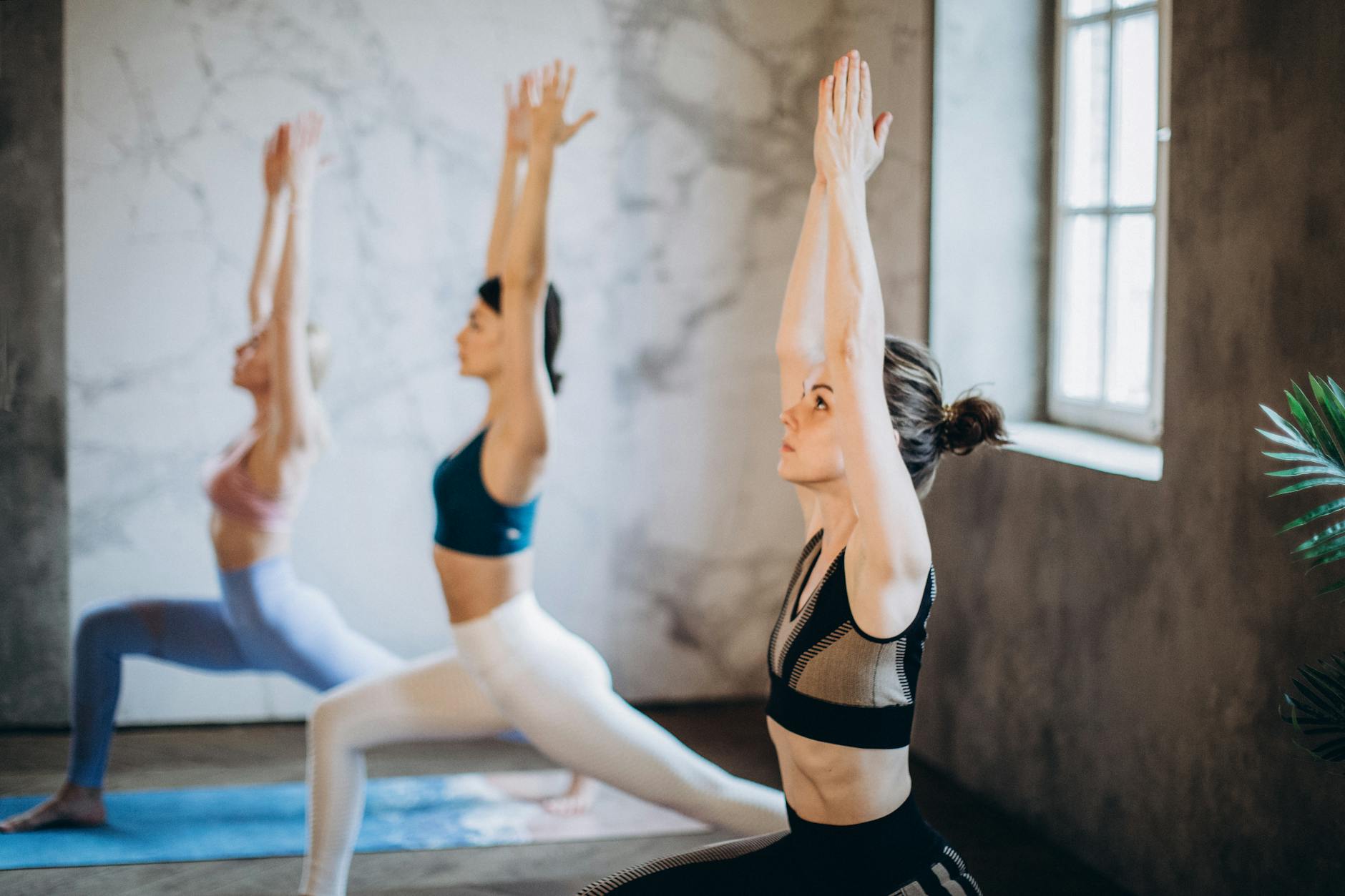
The three warrior poses (virabhadrasana I-III) are poses of strength and power. They lead inward, psychologically and physically, as the practitioner must balance the powerful muscles of the legs and arms by recruiting the small, stabilizing muscles close to the spine.
Why bother?
Commonly, we overuse the big outer muscles of the hips and buttocks. They tend to be strong, capable, and willing. As we age, they begin to suffer from this overuse. Strains, problems with the hip joints, sciatica, and other nerve problems can result. Meanwhile, the deeper spinal muscles get lazy, causing a loss of core strength and organization. In time, this can cause problems with the bladder and other organs.
Even if there is no pain, it takes extra energy to hold yourself together with those big muscles. Training and strengthening the core muscles will yield a healthier posture and result in more efficient movement, saving energy for other pursuits. You can stay light on your feet all your life if you tend to your core.
This is why we’ve been practicing virabhadrasana III over a chair lately. Since this is not commonly taught, I thought it might be helpful to go over it here. I’ve given up waiting for someone to photograph me, so I’ve drawn some modified stick figures, old-school.
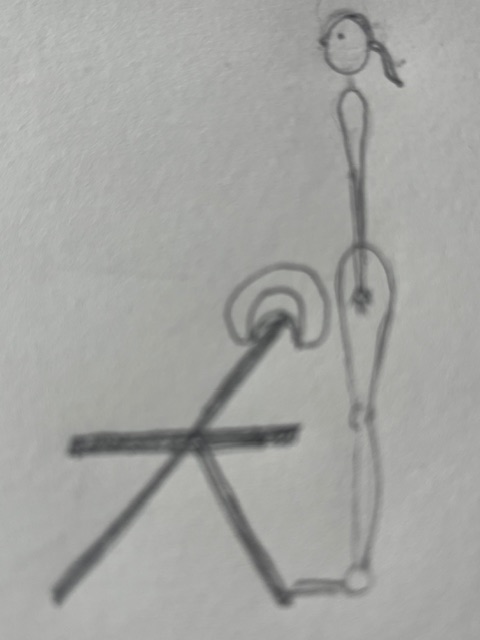
I’ve placed blankets over the chair back so that the top comes right to the level of my hip joint.

When I bend forward, I am supported there, at the base of my pelvis. Because my pelvis is level on the chair, the large external rotators of the lifted leg get turned off. The only thing left to hold my torso up are the small stabilizing muscles near my spine. The internal rotators have to work harder to hold the lifted leg; you can place your foot on the wall for stability and support. Also, notice that the standing foot is right beneath the hip (vertical leg). Begin with your hands supporting your torso and imagine lifting your arms. If that works, lift your arms to the side. If that feels stable, stretch them in front.
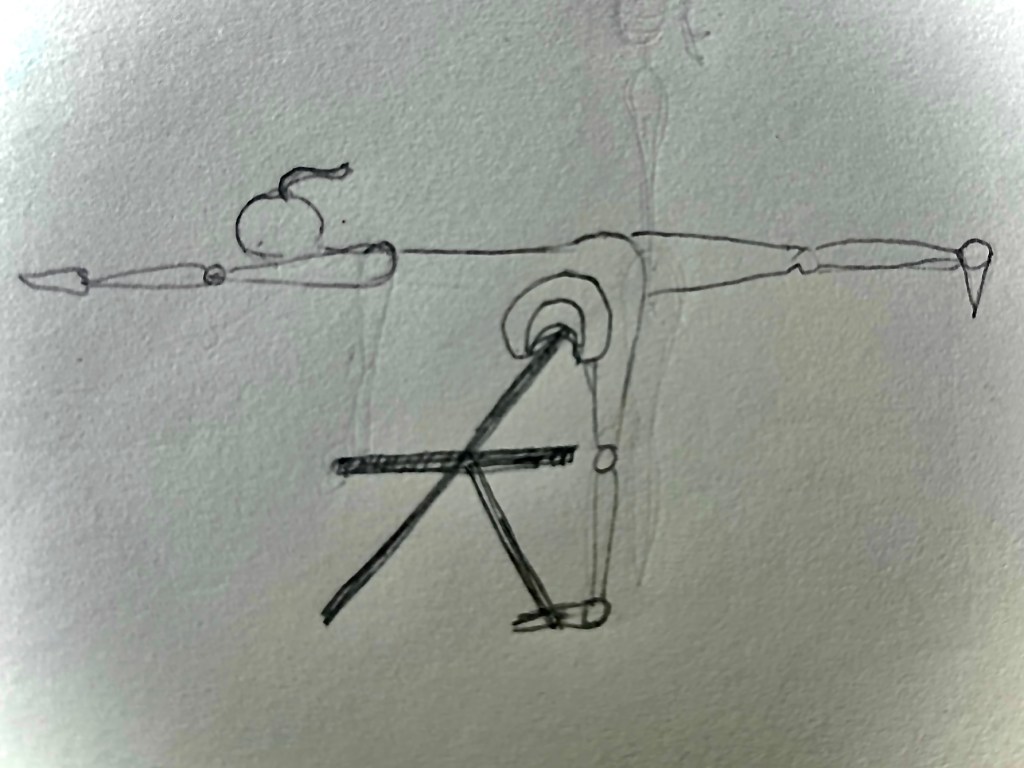
If you have scoliosis or other right/left confusions, you will notice big differences between the two sides. Give yourself the support you need to hold the proper position and simply notice what there is to notice. Practice this frequently and you’ll find the confusion sorts itself out rather quickly. That, in itself, is an interesting lesson.
 Homepage
Leave a comment